

I thought I would kick off my posts with the introduction to my book Mind Over Magick.

Wherever you find people, there have also generally been stories about magick. From folklore and urban legends to pop culture and superstitions, magick is a way to explain the mysteries around us. It offers a sense of control in a dangerous world, can connect us to nature and its rhythms, and helps us interpret seemingly random events, both positive and negative. Through spell working, rituals, and ceremonies, people have long tried to create favorable outcomes, connect with deities, and build community.
Working magick might involve the use of crystals, bones, herbs, charms for luck and protection, cycles of nature, the elements, talismans, ritual tools, or ceremonial dress. There may be activities such as prayer, spell casting, burning of candles and herbs, or divination.
Add to that the idea of a magickal world all around us that may have spirits, fairies, cryptids, monsters, supernatural creatures, portals, energy healing, ley lines, and celestial influence.
All this and more create a massive system of beliefs in matters beyond the mundane. When thinking about magick, there are certainly true believers as well as hardcore skeptics, but most people fall somewhere between the two, which means we have magick in every corner of our lives.
With such a vast and complex belief system comes a great deal of controversy. There are debates about cultural appropriation, symbolism, the properties that various objects intrinsically have, deities, what types of magick are suitable, and the “right” way to practice them.
The biggest question, though, is whether or not any of it is real. Can people astral project? Are there supernatural creatures and deities? Are mediums truly talking to spirits that have passed over? Do spells really work?
An idea or belief system is not necessarily illogical simply because it is false, and we see scientific theory evolve over time as new information becomes available. Before we understood how viruses and bacteria can cause illness, the concepts of humors, angering the gods, or even a spiteful neighbor working with dark forces would have all been logical when a mysterious illness struck one family but not another.
The law of parsimony (also known as Occam’s razor) is a philosophical tool used to discard the most unlikely of explanations. In essence, it states that when faced with competing explanations of a given phenomenon, the simplest one is the most likely.
However, in the case of magick and the supernatural underdetermination, which is the idea that the amount of evidence available to us at a given time may not be sufficient to inform us on what beliefs to hold, comes into play. When a medium gives you a reading, is it spirits connecting, mind reading, or perhaps just using general enough statements that will apply to most people? I have certainly experienced some wildly specific and accurate readings that involved things I didn’t know myself but found out later to be true.
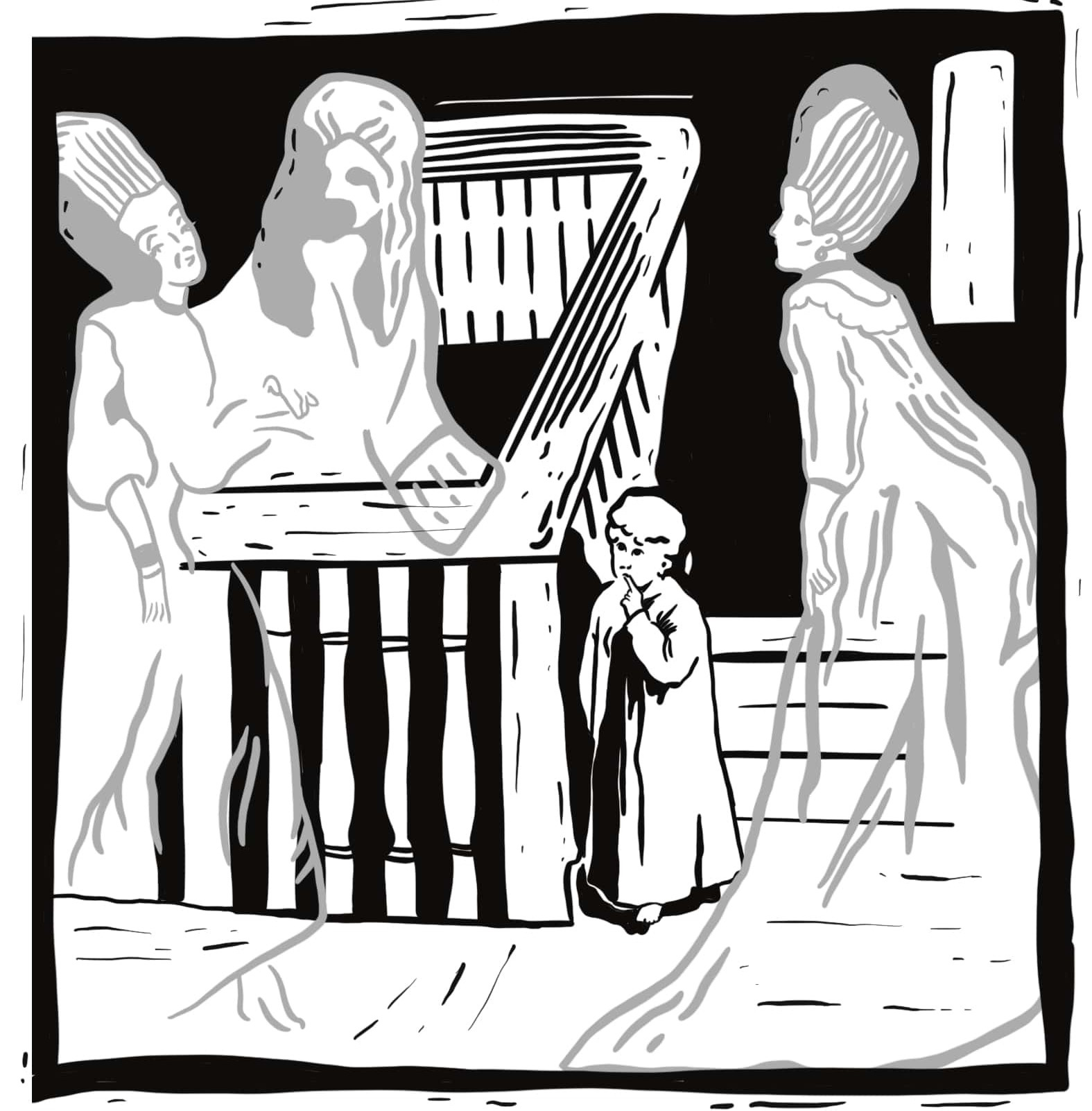
When we see a grainy picture of the Loch Ness monster, the image could be doctored, it might be an optical illusion, or perhaps a massive creature that only shows itself when no one who happens to have a steady hand and a phone with a decent camera is about. So, how do we know what to believe?
Falsifiability is a standard for the evaluation of theories first introduced by Karl Popper in his book The Logic of Scientific Discovery (1934). Any theory can be falsified if it can be refuted with an empirical test. Trying to evaluate the theory that “all magick is real” by verification would entail finding every example of magick and proving it is real. Disproving it would be relatively easy because there are so many scammers, hucksters, and cheats out there plying their bogus readings, cures, and spells on naïve consumers.
However, the statement “some magick is real” is different in that only one positive case would verify that it is, indeed, real. The debate around whether magick is real cannot end at “I have never seen it, so it must not be real,” simply because there are just as many people that can say, “I have seen magickal things happen, so it is real.” In practical terms, magick in and of itself can never be falsified.
Alternately, the idea that there is a “correct” way to do magick can never be verified because there is always a chance that if one way works, another might work as well. So, while we will look at some of what we know to be real and if it can be defined as magick, we won’t look at any specific spells, practices, or rituals. There are a vast number of books of spells and rituals, and an endless supply of the same online. Our purpose here is to explore the nature of magick and our beliefs around it, not to be a supernatural recipe book.
So, where does this leave us? A good start is to delve into a definition of magick. One of the reasons it is so hard to sort out whether magick exists or not is that there are as many definitions of what it is as there are people.
It is easy to see why people are skeptical of magick when their go-to example is something along the lines of waving a wand and making someone float in the air. It is also easy to see why some people become true believers when they experience the unexplainable and only have the supernatural as a way to provide context.
However, there may be something more subtle occurring that can explain what magick is by using what is provable to address the arguments about magick. We can do so without begging the question and leading ourselves to one end of the spectrum or the other of its existence.
The way to do this is to look at what we know to be real and build upon our knowledge from there. It isn’t important if something is fantastical-sounding if we focus instead on breaking down what we know to be true and determining if we have enough knowledge to either verify or falsify magick and its role in our lives.
If you want to read more, you can get the book HERE.