


Thank you to everyone who tuned into my live video! Join me for my next live video in the app.
Beyond Tarot: Uncommon Forms of Divination Worth Exploring
Across cultures and throughout history, people have looked for meaning in everything from birds and books to tea leaves and bones.
When most people think about divination, they think of tarot cards, oracle decks, or maybe a pendulum. Those are wonderful tools, and I use them myself. But in a recent tutorial, I introduced my community to some of the lesser-known forms of divination that have been practiced around the world for centuries.
If you’ve ever been curious about expanding your divination practice beyond cards, here are some fascinating places to start.
What Divination Really Is
At its core, divination is the practice of seeking hidden knowledge or insight. Sometimes that means trying to understand possible futures. Sometimes it means uncovering information that isn’t immediately obvious. And historically, many cultures viewed divination as a way of understanding the will of the gods or spirits.
What I find most interesting is that many forms of divination aren’t really about predicting the future. They’re about creating a conversation between your conscious mind and the symbols, patterns, and experiences around you.
Once you understand that, almost anything can become a divination tool.
Throwing Bones (Without Needing Actual Bones)
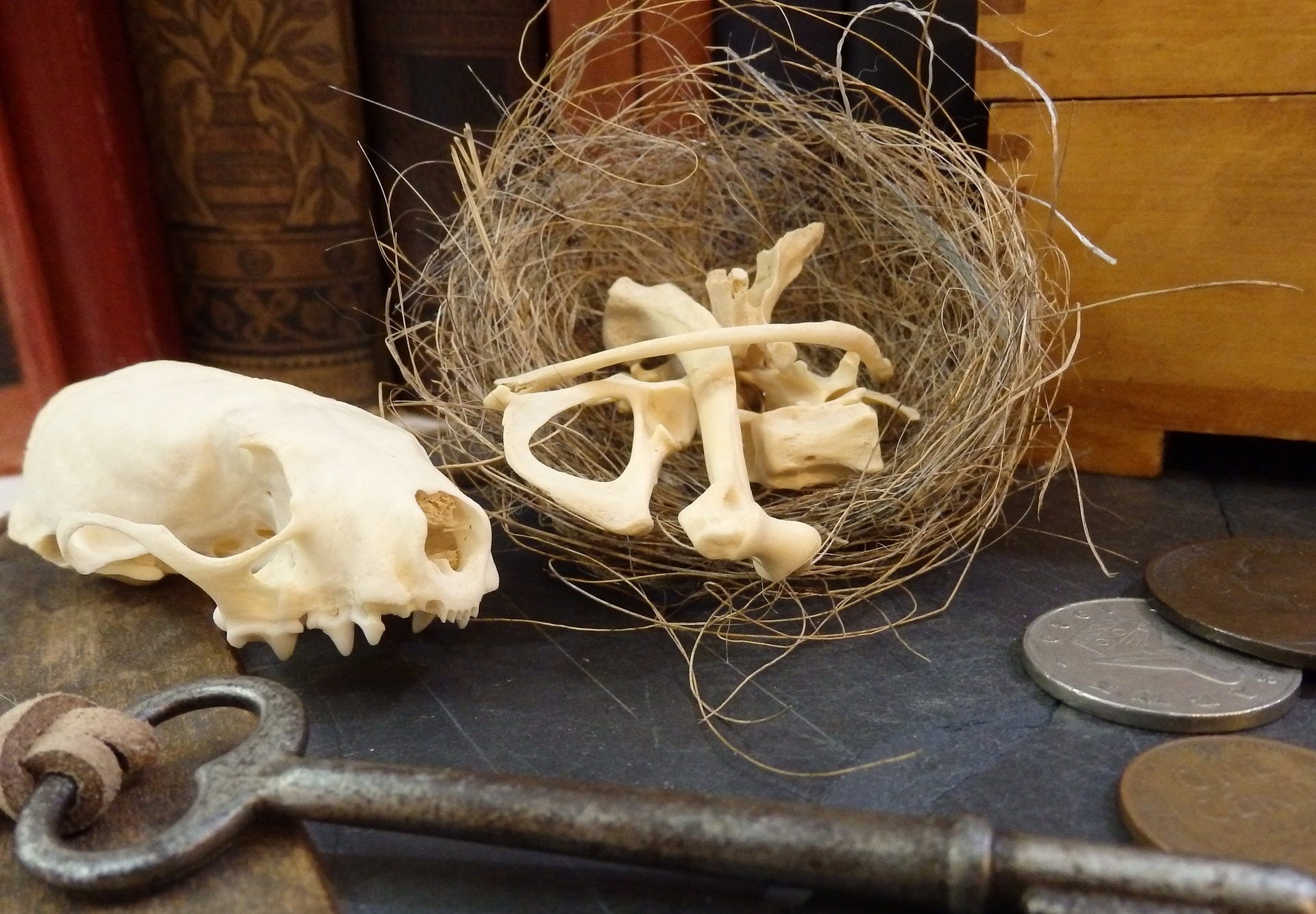
One of my favorite divination methods is bone casting.
Historically, people all over the world used bones as divination tools. Ancient African traditions used them to communicate with ancestors. Ancient European practitioners cast marked bones onto cloths and interpreted their patterns. In parts of China, questions were carved onto bones or turtle shells, which were then heated until they cracked and those cracks were interpreted.
The modern version can be much more approachable.
In fact, I made my own casting set from objects I found around my house and yard. Alongside a few bones, I included things like buttons, beads, an acorn cap and other small objects that hold symbolic meaning for me.
The beauty of this practice is that you create your own symbolic meaning for each piece you include.
Each item represents something different. When you cast them onto a cloth, you interpret their positions, what objects touch one another, and even the directions they’re facing.
An important piece of advice I give people is this: write down your meanings. You think you will remember them, but invariably life will take over and you will realize you haven’t used them in three weeks and you can only remember half the meanings!
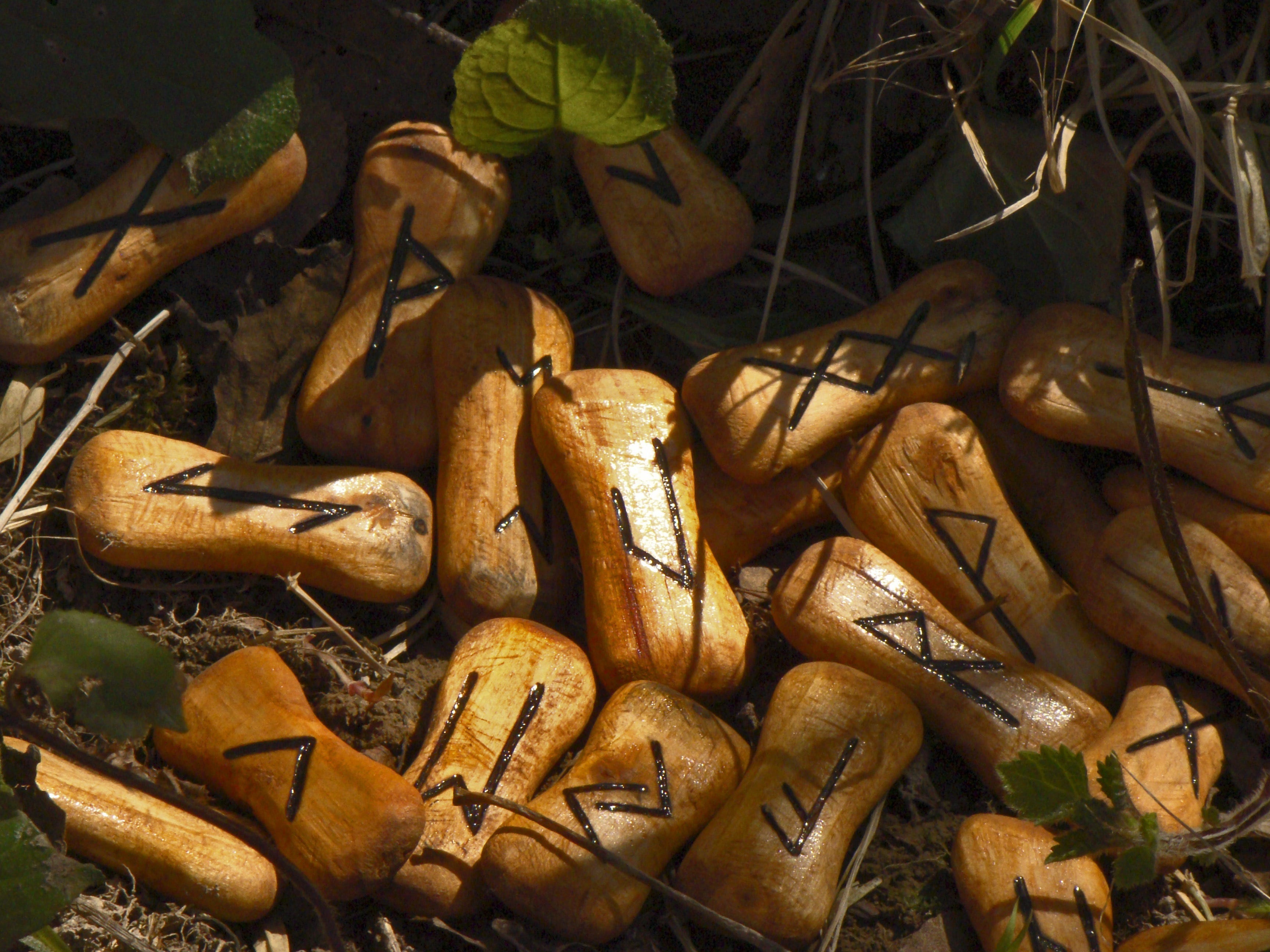
Runes: Ancient Symbols with Modern Relevance
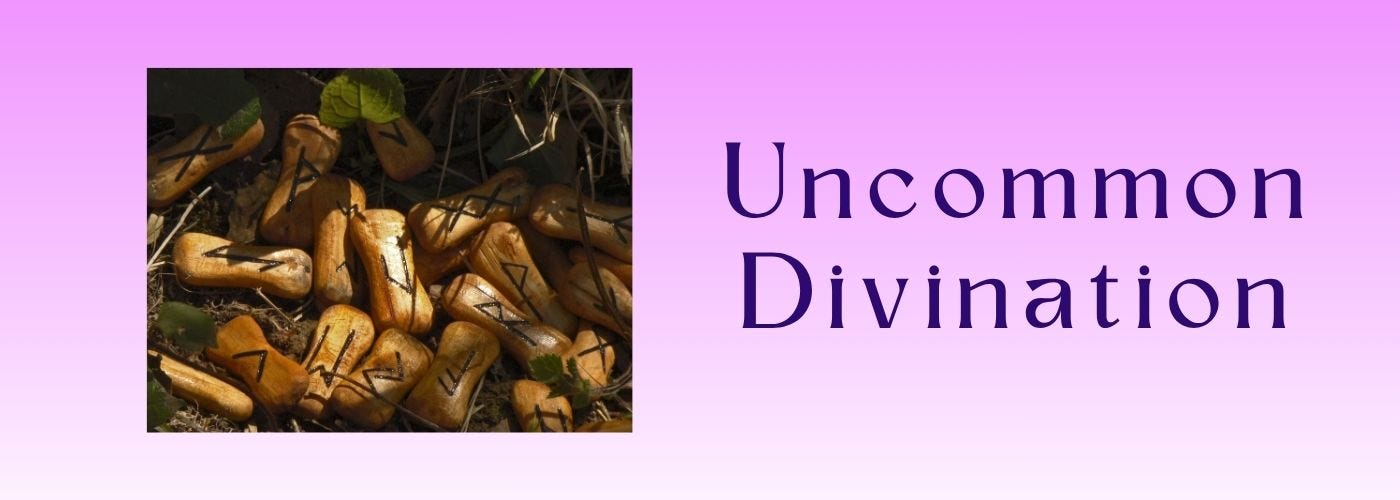
Runes are often associated with Norse traditions, but they’re much more than an ancient alphabet.
Each rune carries layers of meaning and symbolism. While many people learn simple keyword interpretations, I’ve found that the deeper you study runes, the more nuanced they become.
For example, a rune associated with cattle might initially be interpreted as wealth. But historically, cattle also represented responsibility because caring for them required work, attention, and stewardship.
That’s one of the reasons I enjoy working with runes. They invite you to think beyond simple answers and consider the broader implications of a situation.
Like many divination systems, runes become more meaningful the more time you spend developing a relationship with them.
Scrying Isn’t Just Crystal Balls
When people hear the word “scrying,” they often picture a crystal ball sitting in a dark room.
While crystal balls can certainly be used for scrying, they’re only one option.
Scrying is simply the practice of gazing into something and allowing images, impressions, or insights to emerge.
You can scry using:
Fire
Water
Smoke
Clouds
Black mirrors
Obsidian
Reflective surfaces
Personally, I often prefer black surfaces because I find it easier to relax my eyes and focus inward.
In my experience, what you’re looking into matters less than your ability to soften your focus and pay attention to what arises.
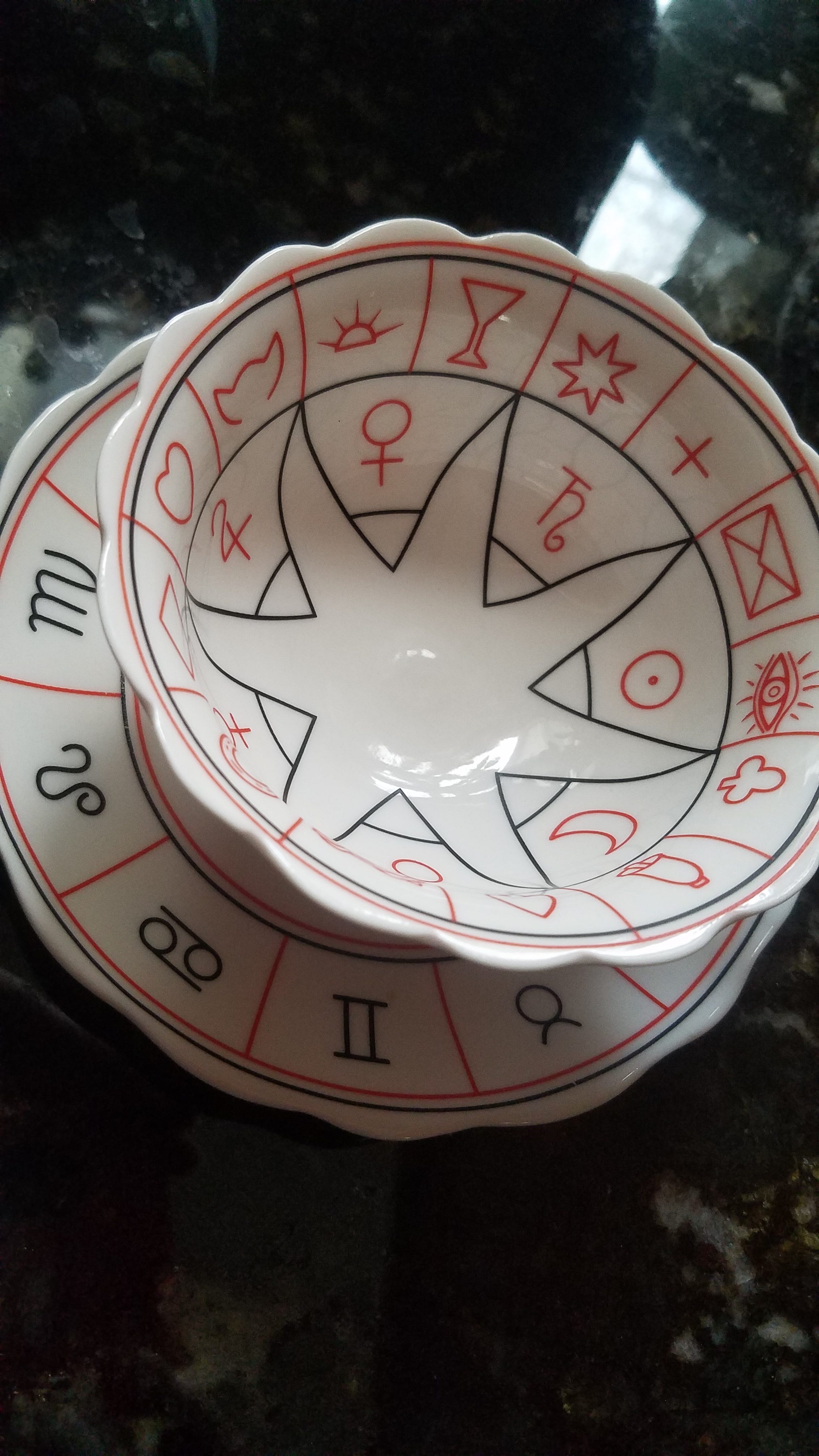
Reading Tea Leaves, Coffee Grounds, and Wine Sediment
Tasseography is one of those divination methods that has survived for centuries because it’s both simple and accessible.
After drinking loose-leaf tea, Turkish coffee, or even a glass of red wine with sediment, you examine the patterns left behind and interpret the shapes you see.
Like cloud watching, this practice relies heavily on symbolism and intuition.
Some people look for specific symbols. Others simply notice what stands out.
What matters isn’t whether two people see the exact same shape.
What matters is what the image means to you.
Bibliomancy: Divination Through Books
One of the easiest divination methods available today is bibliomancy.
You take a book, ask a question, open to a random page, and read the passage that catches your eye.
Historically, sacred texts such as the Bible, Psalms, and Quran were commonly used for this practice.
Today, you can use almost any meaningful book.
I’ve used everything from spiritual texts to folklore books.
The fascinating part is how often a random passage seems surprisingly relevant to the question you’re asking.
Coincidence? Synchronicity? Pattern recognition?
I’ll leave that for you to decide.
Listening for Answers in Everyday Life
An overlooked forms of divination doesn’t require any tools at all.
In ancient Greece and Rome, people practiced a form of divination based on overheard conversations.
They would ask a question and then pay attention to the first words they heard afterward.
While I wouldn’t recommend making major life decisions based solely on a stranger’s conversation, I do think this practice teaches us something important.
We often receive insight from unexpected places when we’re paying attention.
Sometimes the answer we’re seeking arrives in the form of a passing comment, a song lyric, a line in a book, or a phrase that suddenly catches our attention.
The challenge isn’t receiving messages.
It’s noticing them.
Divination Is About Relationship, Not Prediction
After teaching this tutorial, the biggest takeaway I wanted people to leave with was this:
There is no single “right” way to practice divination.
The methods that resonate with you may be completely different from the methods that resonate with someone else.
Some people connect deeply with runes. Others prefer tea leaves. Some enjoy throwing bones. Some feel most comfortable opening a random book and seeing what appears.
The tool matters less than the relationship you build with it.
Divination isn’t about becoming certain about the future.
It’s about learning to listen more carefully—to your intuition, to symbolism, and to the patterns that emerge when you start paying attention.
And if you happen to discover a divination system involving cheese along the way, well, that’s just a bonus.


